SPI Fellows’ Corner: PinkerÔÇÖs Platform, and Shermer on the Hill
Earlier this week, the LA Times reported that Facebook CEO Mark Zuckerberg named Fellow Steven PinkerÔÇÖs The Better Angels of Our Nature: Why Violence Has Declined as his book clubÔÇÖs second pick of the year. Up to 270,000 members will use the group ÔÇ£A Year of BooksÔÇØ to read and discuss a new volume every two weeks in 2015.
PinkerÔÇÖs Better Angels poses the argument that, in terms of our human history, violence is currently on the decline around the world. As Zuckerberg explained: “Recent events might make it seem like violence and terrorism are more common than ever, so it’s worth understanding that all violenceÔÇöeven terrorismÔÇöis actually decreasing over time. If we understand how we are achieving this, we can continue our path towards peace.”
The Facebook CEO went on to comment that in spite of its hefty 800-page volume, he chose PinkerÔÇÖs book because several trusted sources told him it was the best they had ever read. Based on the stats of the clubÔÇÖs first pick, hundreds of Page comments are expected in the dialogue following the one-month read. Regardless, ZuckerbergÔÇÖs selection may yield additional purchases of PinkerÔÇÖs book in the tens of thousands, which means an ever-broader reach for a renowned proponent of secular values.
On Wednesday, Fellow Michael Shermer held the floor at the Cato Institute when he gave a talk on The Moral Arc of humanity, and signed copies of his latest book by the same name. On Wednesday afternoon and Thursday morning, he embarked on a greater challenge: joining Edwina Rogers in direct meetings with members of the 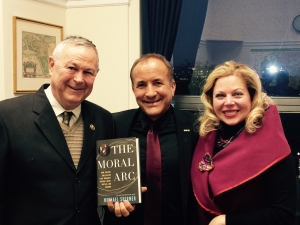 House to discuss how his findings relate to the current state of American politics.
Among the Representatives with which SPI made a connection were Congressman McCaul, Congressman Swalwell, Congresswoman Lofgren, Congressman Grayson, Congressman Rohrabacher, and Ranking Member Eddie Bernice Johnson.  All are members of the Science Committee who were willing to brainstorm with Shermer on how to increase the influence of scientific knowledge on U.S. policy. Partnership with these offices means they will be able to act as conduits of reason-oriented legislation.
 A new report from the International Humanist and Ethical Union shows that even as religious belief is in global decline, a number of governments are stepping up attempts to portray secularists and atheists in a negative and often dangerous light. The report cites 13 Muslim states where apostasy and blasphemy are capital offenses; in Russia, public expression of atheist views can be treated as a criminal blasphemous offense. The trend is even seen in some western countries, like Britain, whose government has recently dropped atheism and humanism from religious studies in state schools.
 In the last fifty years, the Jewish population across America has changed drastically. With a third of millennial Jews identifying themselves as non-religious, and the growing numbers of inter-faith marriages – which often lead to a downplayed role of religion – the number of religious and practicing people of Jewish descent are in decline. While some Humanist Jewish groups have begun to spring up across the country, it remains to be seen what the effects of the secular Jewish culture on the population as a whole.
 An atheist group recently sued Ocala, Florida in response to an officially sponsored community-wide prayer vigil. In this interview from Fox News, watch mayor Kent Guinn explain the case and the event that started it all, which he refers to as a “prayer rally for all religions.” The group bringing the legal challenge argues that the city is showing preference to one religion and violating constitutional rights in doing so.
 Edwina Rogers, CEO of Secular Policy Institute, has recently returned from a conference in Muscat, Oman, where General David Petraeus was the keynote speaker. In addition to making connections and receiving advice from experts in various fields, three new fellows agreed to join forces with the Secular Policy Institute:
Edwina Rogers, CEO of Secular Policy Institute, has recently returned from a conference in Muscat, Oman, where┬áGeneral David Petraeus was the keynote speaker. In addition to making connections and receiving advice from experts in various fields, three new fellows agreed to join forces with the Secular Policy Institute: Lawsuits┬áfor and against using the phrase “under God” in the Pledge of Allegiance are being heard in New Jersey as one family claims the practice discriminates against students with non-religious beliefs, and another student argues that she has the right to recognize that her rights as an American come from God.